The Imperial Citadel of Thăng Long lies at the heart of modern Hanoi, yet it carries over a thousand years of history. Established in 1010 under the Lý dynasty, it served as the political and cultural hub of Vietnam through successive dynasties. Recognized as a UNESCO World Heritage Site, the citadel is a rare place where you can see Vietnam’s evolution in layers — ancient palaces, colonial remnants, and even wartime bunkers all coexisting in one vast complex.
Visiting the site feels like walking through a time tunnel: from the grandeur of imperial ceremonies to the tense atmosphere of modern war strategy, every corner of the citadel reveals another chapter of Hanoi’s story.

What to See & Do
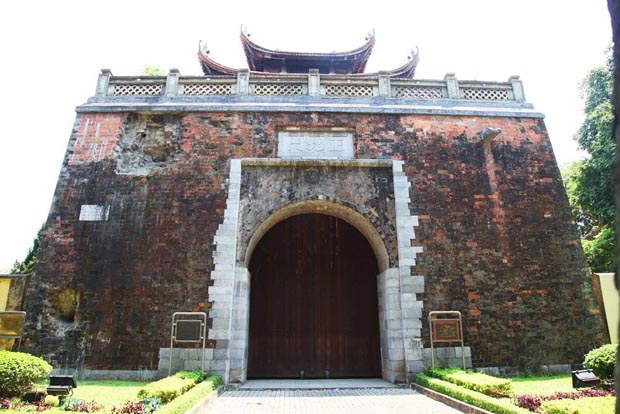
Đoan Môn Main Gate
Step through the citadel’s grand southern gate, once the main entrance to the royal court. The gatehouse, rebuilt in later centuries, still carries the solemnity of its past. Beneath it, archaeologists uncovered earlier structures that show the citadel’s long-standing importance.
Hanoi Flag Tower
Built in the early 19th century, the Hanoi Flag Tower is one of the few citadel structures that survived demolition during the French colonial period. Today, it rises proudly above Ba Đình Square, a symbol of Hanoi’s resilience and national pride.
Kính Thiên Palace Foundations
Although the palace itself no longer stands, visitors can still see its stone dragon stairways and foundation platform. This was once the ceremonial center of the royal court, where emperors conducted state affairs and received foreign envoys. The carved dragons are among the finest examples of 15th-century Vietnamese art.
Archaeological Site at 18 Hoàng Diệu Street
This is the citadel’s most fascinating area for history lovers. Excavations here have uncovered layers of urban development: Tang-era defensive walls, Lý and Trần dynasty palace foundations, and Lê dynasty reconstruction works. It’s like reading a vertical history book carved into the soil.
D67 Building & Underground Bunker
Fast forward to the 20th century: the D67 headquarters was built in 1967 to house the command center of the Vietnam People’s Army. Inside, you can still see maps, communication tools, and secret tunnels leading to underground bunkers. It’s a striking contrast to the ancient ruins just outside.
On my visit, I entered through Đoan Môn under soft morning light, imagining mandarins and royal guards once crossing the same path. Standing on the dragon steps of Kính Thiên Palace felt both humbling and surreal, knowing emperors once ruled from this very spot.
The highlight was the archaeological site at Hoàng Diệu, where exposed brick foundations revealed centuries of history stacked one atop another. Later, stepping into the D67 bunker, I felt like I had jumped forward nearly a thousand years — from the quiet of an imperial ruin into the tense atmosphere of wartime command.

By the time I left, I realized the citadel wasn’t just a relic. It’s a living record of Hanoi itself — a city shaped by emperors, colonizers, and revolutionaries alike.