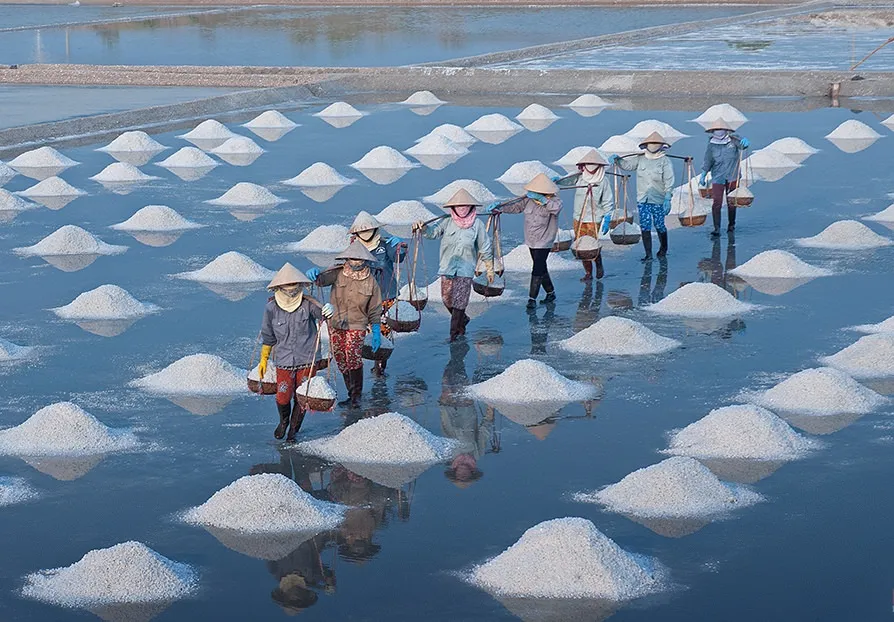
Hidden away along the rugged coastline of Northern Vietnam, Bạch Long Salt Field is one of those rare gems that remains completely untouched by mass tourism. During the peak harvesting season, these expansive coastal flats transform into giant, reflective surfaces – resembling a natural mirror stretching seamlessly into the horizon.For landscape photographers, drone pilots, and travelers searching for an authentic, off-the-beaten-path experience, Bạch Long offers a peaceful, cinematic glimpse into traditional Vietnamese coastal life.
Where is Bạch Long Salt Field Located?
Bạch Long Salt Field is located in Bạch Long Commune, Giao Thủy District, Nam Định Province – roughly 130 kilometers (80 miles) south of Hanoi.
Fact Check Note: While it is often combined with road trips to neighboring Ninh Bình, the salt fields officially belong to the coastal network of Nam Định Province (now is Ninh Binh Province too).
Spanning over 230 hectares, this area is celebrated for:
- Traditional, generational salt farming.
- Breathtaking, glass-like reflective landscapes.
- The raw, rural scenery of the Red River Delta coastline.
- Proximity to local fishing communities and ecotourism hubs like Xuan Thuy National Park.
Best Time to Visit Bạch Long Salt Field
Timing is everything when visiting a salt farm. To witness the dramatic mirror reflections and active harvesting, you need to sync your visit with the sun and local labor schedules.
The Peak Season: March to August
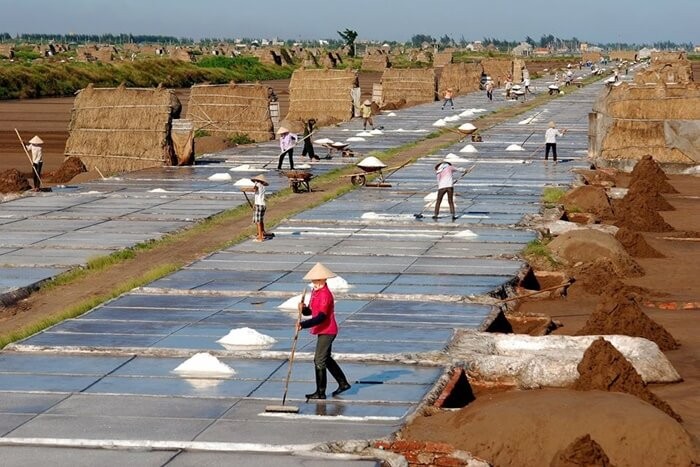
The salt-making season thrives during the hottest months of the year. Intense sunlight and dry conditions are mandatory for the seawater to evaporate and crystallize into what locals call “white gold.”
Choosing the Right Time of Day
| Time of Day | What You’ll Experience | Best For |
| Sunrise (4:30 AM – 8:00 AM) | Mild temperatures, soft golden light, and atmospheric mist. You will see diêm dân (salt farmers) preparing the fields and spreading sand. | Clean reflections, quiet landscapes, and low-light photography. |
| Midday (11:00 AM – 2:00 PM) | Scorching heat but peak crystallization. The sun reflects intensely off the white salt mounds. | Harsh but brilliant geometric lighting patterns. |
| Sunset (4:00 PM – 6:00 PM) | Warm, fiery tones and long silhouettes as workers harvest, rake, and wheel the salt into storage. | Storytelling photography, drone videography, and dramatic sky backtracks. |
What Makes Bạch Long So Unique?
Unlike the industrial salt flats found in other parts of the world, Bạch Long still preserves a meticulous “sand-drying” technique passed down through generations.
Instead of letting seawater sit in deep basins, farmers meticulously spread a fine layer of sand, douse it with seawater, and let the sun evaporate the moisture. The salt crystals attach to the sand grains, which are then raked, filtered through a clay basin system, and dried one final time on concrete pads.
The resulting landscape is a dynamic canvas that shifts constantly based on weather, water levels, and the time of day. Under a clear sky, the smooth clay flats reflect the clouds so perfectly that the boundary between earth and heaven completely disappears.
Pro Photography & Travel Tips
- Bring a Wide-Angle Lens: The vastness of the flats calls for wide focal lengths to capture the immense scale of the horizon.
- Drones are Highly Recommended: From an aerial viewpoint, the geometric grids of the salt plots create stunning, minimalist abstract compositions.
- Interact Respectfully with Locals: The salt farmers work incredibly hard under brutal heat. A friendly smile, a polite nod, or asking “Photo?” goes a long way. If they pose or spend time showing you their tools, a small tip (50,000 – 100,000 VND) is a wonderful gesture of appreciation.
- Wear Appropriate Footwear: Leave your nice shoes behind. The high salinity will ruin leather or suede. Wear waterproof sandals, flip-flops, or rubber boots.
- Maximize Color Contrast: If you plan on being in the photos, wear vibrant primary colors like red, bright yellow, or deep blue to pop against the white salt and blue sky.
What to Expect: A Raw Travel Experience
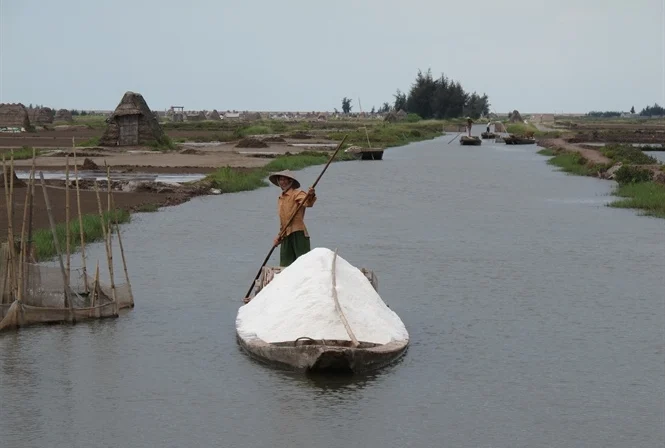
Bạch Long is not a luxury tourist destination. There are no fancy cafes, English signage, or commercialized souvenir shops.
Instead, visitors will experience a destination that is slow-paced, visually unique, and intensely authentic. In recent years, the community has introduced small-scale experiential tourism models, allowing discerning travelers to step onto the flats and try their hand at raking or transporting salt alongside local families.
Combining Your Itinerary
Because Nam Định sits neatly in the cradle of the Red River Delta, you can easily turn your visit into a 2-day countryside road trip from Hanoi by pairing it with:
- Xuan Thuy National Park: A UNESCO-recognized biosphere reserve perfect for bird-watching.
- Ninh Bình: Explore the world-famous limestone karsts of Trang An or Tam Coc, just a 1.5-hour drive away.
- Nam Định’s Ruined Churches: Capture the eerie beauty of the Hai Ly Ruined Church right on the coastline.