Quan họ is a traditional Vietnamese folk song form that originated in Bắc Ninh Province. It features call-and-response duets, usually performed by female and male singers in traditional garb. The melodies are hauntingly lyrical, with singers weaving harmonies, ornamentations, and emotional poetry — all delivered with a sense of intimacy and connection.
For travelers, Quan họ offers a slightly slower, deeply human way into Vietnamese musical heritage. It’s less theatrical drama than Chèo or Cải Lương, more like a sung conversation: soulful, personal, and rooted in community traditions.

What to Expect
- Duet Structure & Musical Dialogue
Quan họ songs are sung as pairs: one singer “calls” a melody line, and another “responds” with a complementary or contrasting melody. The dialogue might express longing, reunion, longing for reunion, or playful flirtation — all carried in polished, ornamented vocal lines. - Floral Headdresses & Traditional Dress
Singers often wear áo tứ thân (four-panel traditional dresses) and áo yếm (vest-like undergarments), capped with traditional floral crowns or headpieces, which adds visual beauty and cultural resonance to their performance. - Minimal Accompaniment, Maximum Voice
Quan họ is typically performed a cappella, with only minor percussion or subtle instrumental support (like bamboo clappers). The clarity and purity of the human voice is central. - A Sense of Community & Ritual
Often performed as part of festivals, weddings, village gatherings or seasonal rituals, Quan họ isn’t just “on stage”: it can be participatory, inclusive, and welcoming. Audiences sometimes join in simple refrains or clap along in acknowledgment.
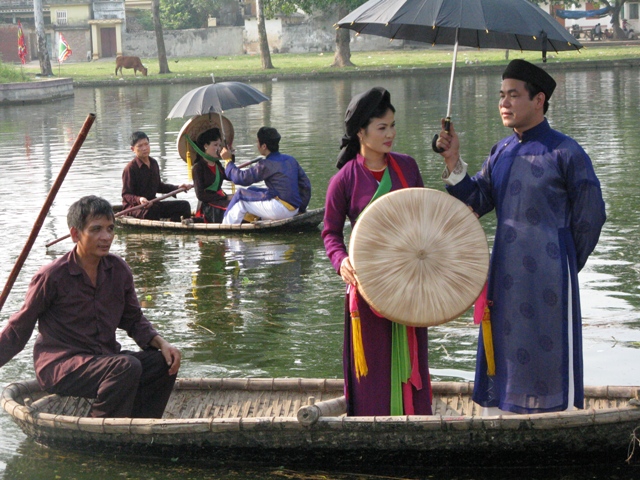
I once traveling on the heritage train visited a small Bắc Ninh village during the lunar New Year. After dinner, locals gathered under lanterns in the courtyard. Two young women in colorful áo tứ thân sang a song of reunion in softly ornamented voices, and two men answered with a melody that echoed like water greeting moonlight.
The air was warm, humid, and still. When one singer paused, the other held the note a fraction longer as though listening to the breath of the wind. It felt like a ritual of recognition — a way of saying, “We hear each other, we remember each other.”
People nodded, smiled, and occasionally hummed in response. It wasn’t a staged concert. It was music grown from community, history, and care.
Where to Hear Quan họ in or near Hanoi
- Bắc Ninh Folk Music Center: The province of Bắc Ninh has several centers and festivals dedicated to Quan họ singing. Some tourist-friendly venues offer scheduled performances and workshops, especially around major holidays (Tet, Mid-Autumn, harvest festivals).
- Thành cổ Bắc Ninh Festival: If your travel coincides with local festivals, you might catch large-scale Quan họ concerts in public squares or temple festivals.
- Cultural houses or village commune events: In rural Bắc Ninh (or nearby provinces), small village halls sometimes host Quan họ evenings — particularly when outside guests arrive, or during wedding celebrations or lunar-calendar festivals. Your best bet is to connect through a local guide or homestay that can arrange a “Quan họ night.”
- Folk music events in Hanoi: Occasionally, cultural centers or folk-arts clubs in Hanoi invite Quan họ singers as guest performers, especially during heritage weeks or cultural festivals. Check with local event listings, cultural houses, or ask your hotel concierge.
Tip: Quan họ concerts can be spontaneous or informal. If you want to catch them reliably, ask a local cultural office or guide, or look for “Quan họ Bắc Ninh” performances tied to seasonal festivals or homestays.