The Ho Chi Minh Mausoleum is one of Hanoi’s most solemn and symbolic landmarks. Standing in Ba Đình Square — the spot where Ho Chi Minh declared Vietnam’s independence in 1945 — the mausoleum houses the embalmed body of Vietnam’s revolutionary leader. It’s a place of pilgrimage for many Vietnamese, a living expression of national reverence and history, and a deeply moving site for foreign visitors.
Visiting the mausoleum isn’t just sightseeing. It’s a chance to slow down, reflect, and witness a ritual of respect that remains central to Vietnamese national identity.
What to Expect
Architecture & Grounds
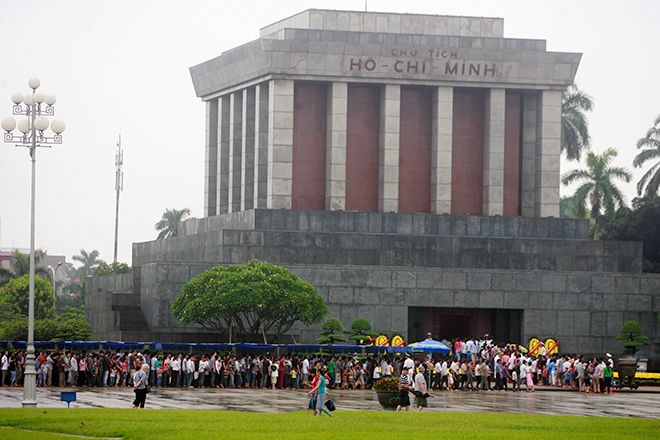
The mausoleum is an imposing block of gray granite and polished stone, blending Soviet-inspired monumentality with Vietnamese aesthetics — the sloping roof and the inscription “Chủ tịch Hồ Chí Minh” (President Ho Chi Minh) give it both gravity and cultural specificity.
Inside, the structure is carefully climate-controlled, with marble walls and soft lighting. Ho Chi Minh’s body lies in a glass coffin under respectful guard, and outside, the gardens and Ba Đình Square offer a broad forecourt for reflection and ceremony.
Visiting Rules & Atmosphere
Expect strict rules: no photography or video, silence required, no large bags or loose items, and a dress code (shoulders and knees covered).
Entry is through a single-file line after security checks, and your visit inside is generally brief and very quiet — just enough time to pay respects and move on.
When to Go
The mausoleum is typically open on Tuesday–Thursday, Saturday and Sunday mornings, with varying opening hours depending on the season. It’s closed on Mondays and Fridays, and closes for maintenance annually (often in the fall).
If your timing allows, try to catch the flag-raising ceremony on Ba Đình Square early in the morning — it’s a strong way to feel the symbolic weight of the place.
I arrived just as dawn was breaking over Ba Đình Square. The mausoleum stood quietly in the morning haze, its gray stone monolithic against a pale sky. A steady stream of people — locals and tourists alike — moved toward the entrance.
After a quick security check, I joined the line. Inside, the air was cool and hushed. Guards in crisp uniforms stood sentry as I walked slowly past a glass coffin holding Ho Chi Minh’s body. His face looked peaceful, even stern, and the soft lighting made the marble walls around him glow with muted dignity.
I stayed only a minute or two before being gently guided out, but the silence felt thick, and the walk across the square afterward — through gardens and past the Presidential Palace — was meditative. Outside, morning traffic began to stir, vendors set up nearby, and the contrast between quiet reverence and everyday life felt powerful and grounding.
Join our Hanoi city tour to visit Ho Chi Minh Mausoleum