Tucked beside the western edge of West Lake, Quán Thanh Temple is one of Hanoi’s oldest Buddhist sanctuaries, dating back to at least the 6th or 7th century. It offers a beautifully quiet counterpoint to the bustling Old Quarter — shaded gardens, historic architecture, lake views, and a sense of centuries-old spiritual calm right inside the city.
This temple is fascinating both as a living religious site and as a window into Vietnam’s past, blending Taoist, Buddhist and indigenous beliefs. For travelers, visiting Quán Thanh is a chance to slow down, soak up Hanoi’s lakeside ambiance, and connect with older layers of local belief and architecture.
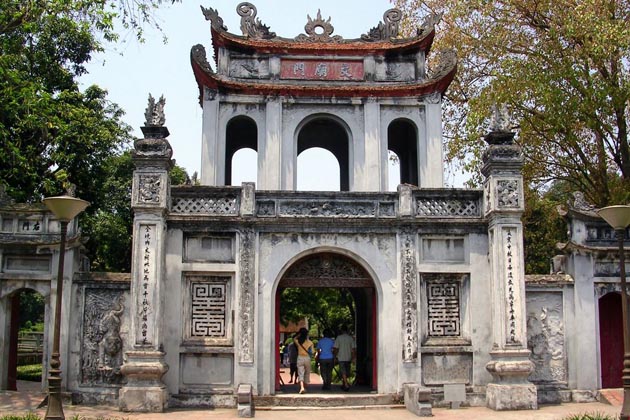
What to See & Do
Lakeside Setting
The temple sits on slightly raised ground, just off the water’s edge of West Lake. The breeze from the lake and the canopy of trees make the courtyard gently cool, even on hot days. The site has a peaceful quality — the sound of water lapping, birdsong, and soft chanting drift together easily.
Main Shrine & Statues
Inside the inner hall, you’ll find altars to Tây Phương Tam Thánh (the “Three Western Paradises” Buddhas), flanked by guardian deities and Bodhisattvas. The temple architecture favors balance and clarity: visitors smoothly move from outer courtyards through gates and corridors into the quieter inner sanctuary, gradually preparing for contemplation and prayer.
Architectural Layers
Quán Thanh Temple exhibits architectural influences from several periods. You’ll see tile-roofed pavilions, wooden beams carved with dragons and phoenix motifs, and tiled walkways that reflect traditional northern Vietnamese craftsmanship. Some structures were rebuilt during the Lê dynasty or later, so you see layers of restoration. The garden and pond layout reflects classic temple planning: water as reflection, paths as movement, and courtyards as pauses.
Ritual Life
Although quieter than some larger temples, Quán Thanh remains an active religious site. You may observe monks or local Buddhists offering morning prayers, lighting incense, or quietly circulating through the courtyard. On certain Buddhist holidays, the site can become more lively with flower offerings, ritual music, or community visiting.
I visited early one Sunday morning, arriving just as local worshippers were lighting incense. The temple courtyard was shaded by banyan trees, and spilled sunlight filtered onto the tiled floor in shifting patches. I wandered slowly, pausing beside a small pond to watch koi and listen to distant West Lake water lapping.
Inside the main shrine, the scent of incense mixed with old wood and candle wax was calming. A monk chanted quietly, and a few visitors knelt in respectful silence before the central statues. I stayed long enough to drink tea in a nearby lakeside café afterward — the contrast between temple calm and lakeside bustle felt particularly peaceful.

By tradition, Hanoians often come to Quan Thanh Temple on the occasion of Tet (Vietnamese Lunar New Year) or the first and fifteenth of each lunar month (new and full moon respectively) to worship and pray for health, luck and happiness for them and their relatives.