Just a short drive from central Hanoi, Bát Tràng Village is Vietnam’s most famous ceramics hub, with centuries of pottery-making heritage. Visiting here lets you go behind the scenes of a classic handicraft village: from kneading clay and shaping pots, to firing kilns and painting glazes — all still done in workshops that combine tradition and adaptation to modern demand.
For travelers, it’s a hands-on way to connect with Vietnamese craft heritage, see artisans at work, and even try your hand at shaping a piece of pottery. Let’s take a short tour to Bat Trang ancient pottery village (just approximately 20 km far from Hanoi center.

What to Expect
Workshops in Action
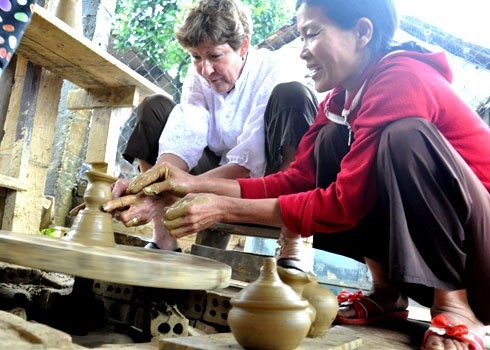
You’ll walk through narrow lanes lined with clay-stained footprints and low-roofed workshops where potters sit at wheels or bent over long tables forming vases, rice bowls, tea sets, and decorative objects. The rhythmic thump of clay meeting wheel, the hiss of glaze brushing against a pot, and the scent of kiln dust give the village a sensory richness that’s hard to replicate.

Live Demonstrations & DIY
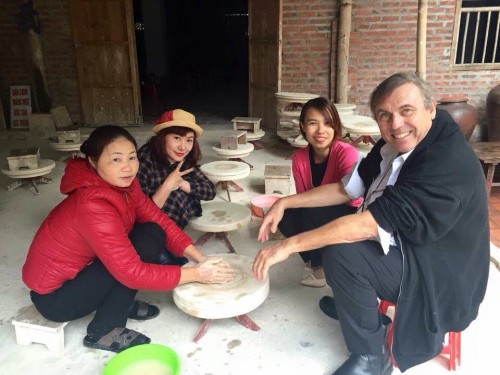
Many workshops offer live demos — potters show how they wedge and center clay, form walls, trim bases, and apply glaze. Some go further, offering short “make-your-own” sessions: you might throw a vase, stamp a motif, or paint a ready-fired piece with your own design, then arrange to have it fired and shipped.
Market Meets Craft
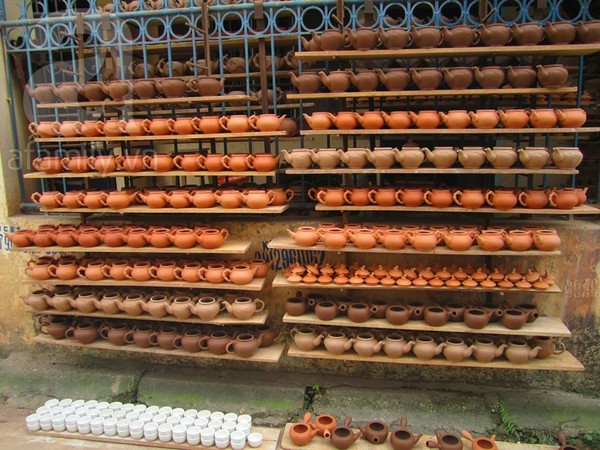
Pottery showrooms sit right alongside production areas. You can browse glazed dinnerware, decorative ceramics, modern porcelain, and traditional folk pottery — often priced at a steep discount compared to city retailers. Expect to haggle moderately, especially if you’re buying bulk or custom-painted items.
Village Charm & Innovation
Bát Tràng is still very much a living village. Kids play near clay pits, families pack up painted sets at dusk, and newer studios experiment with fusion designs: minimalist porcelain, celadon finishes, and even 3D-printed molds complement the old-school terracotta pots.

I strolled down a narrow alley where clay footprints led from a kiln into a workshop. A craftsman hunched over a spinning wheel, shaping a delicate teapot with wet hands. Nearby, a young woman was glazing a rice bowl, her brush strokes careful and confident — each swirl of cobalt blue looked like water rippling in a pond.
I signed up for a 15-minute “throw your own bowl” session, got my hands muddy, and surprised myself by managing a rough—but recognizably bowl-shaped—clay form. I painted it with a soft green glaze, then watched as a kiln technician loaded it into a glowing chamber with glazed plates and vases. Walking away, I felt the sticky clay under my nails and the satisfaction of having made something imperfect but mine.
I left with a small glazed cup and a new respect for how much patience and intuition pottery requires.